There is always much discussion about which profile is better, “M” or “V”. At times and for general plumbing installations, the performance criteria are similar, if not the same for these profiles. However, there are differences in the higher end performance for each profile.
Let’s begin with history; The first press system was developed back in the 1950’s, was patented in 1962 and was the “M” profile. At the time, the system was granted a 50 year patent protection making it difficult for any competitors. Many years later, in 1989, the “V” profile was developed and released to market. Later again, in 1997, a slightly different profile, the “SA” profile was developed and released to market.
Why are they referred to as “M”, “V” and “SA”? Well, the first system was “M” profile and developed by Mannesman GmbH, the “V” profile was developed by Viega LLC and the “SA” profile was developed by Sanha GmbH. Clearly, the companies decided to use the first letters of their company names to label the profile they had developed.
What is the difference in the appearance of the fittings? Quite simply, the “V” profile has a “tail” leading from the fitting, whereas the “M” and “SA” profiles profiles do not.
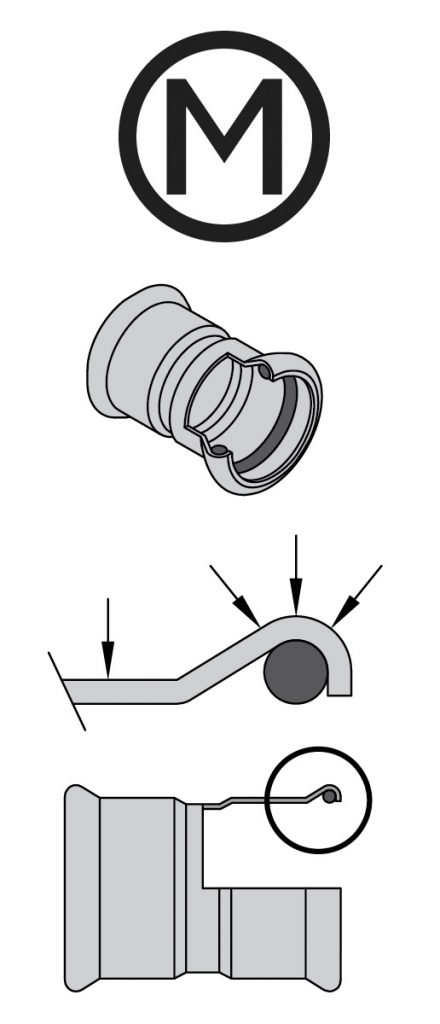
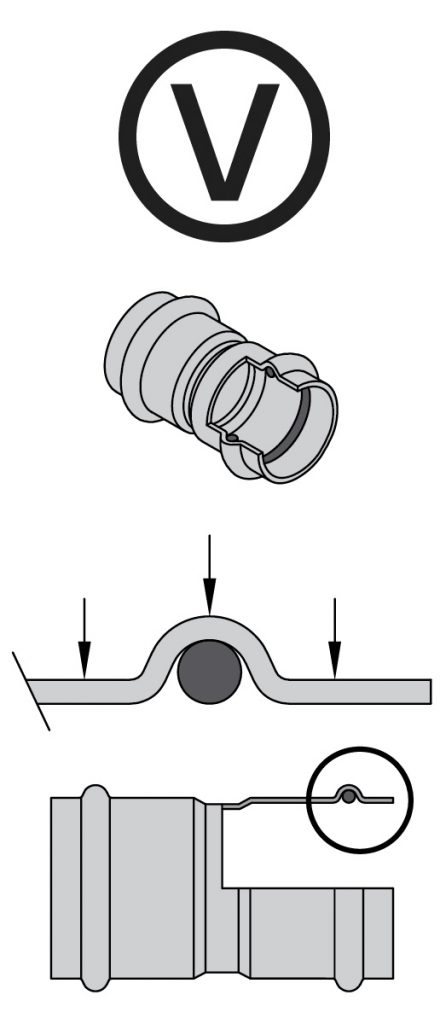
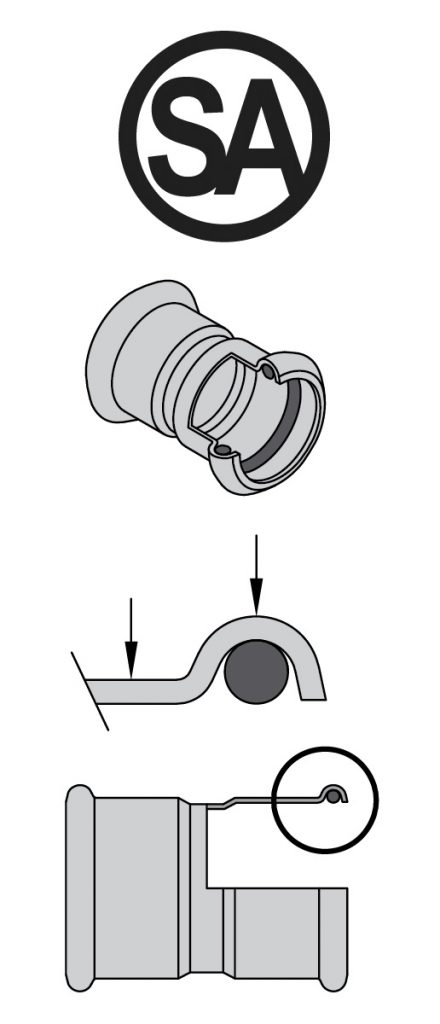
What is the difference in the performance of the fittings? This has been a debate for many years. However, all we can refer to is the recommendations of the manufacturers of both the fittings and the tooling. Gathering all of the available information and referring to manufacturers recommendations, we have developed the below chart for reference.
Maximum working pressure for potable water at ambient temperature (kpa)
|
|
|
|
|
|
|
|
|
|
|
“M” Profile |
|
“V”Profile |
|
“SA” Profile |
| Size |
|
Standard |
HP |
|
|
|
|
| 15mm |
|
4000 |
N/A |
|
1600 |
|
1600 |
| 22mm |
|
4000 |
N/A |
|
1600 |
|
1600 |
| 28mm |
|
2500 |
4000 |
|
1600 |
|
1600 |
| 35mm |
|
2500 |
4000 |
|
1600 |
|
1600 |
| 42mm |
|
2500 |
4000 |
|
1600 |
|
1600 |
| 54mm |
|
2500 |
4000 |
|
1600 |
|
1600 |
| 76.1mm |
|
1600 |
2500 |
|
N/A |
|
1600 |
| 88.9mm |
|
1600 |
2500 |
|
N/A |
|
1600 |
| 108mm |
|
1600 |
2500 |
|
N/A |
|
1600 |
| 168.3mm |
|
1600/2000* |
N/A |
|
N/A |
|
N/A |
“Standard & HP” refer to Jaw types | “V” Profile maximum working pressures taken from technical catalogues of Viega & Connex Banninger |”SA” Profile maximum working pressures taken from Sanha | *168.3mm pressures differ depending on single pressing or double off-set pressing
Why is there a difference in the maximum allowable working pressure? It all comes down the press profile and the way the force is applied to the fittings when being pressed. As you will see in the above images, the “M” profile fitting allows for 4 press points, while the “V” Profile fitting allows for 3 and “SA” Profile allows for only 2 press points. This has a dramatic effect upon the overall security and pressure rating of the actual joint.
All manufacturers of press fittings use the same raw materials and are certified to the same standards. The biggest difference is the profile of the fittings and the tooling used. Based on all of this information, if you are looking for the maximum safety in any installation, “M” Profile fittings pressed using the appropriately rated tool (minimum 32 kN) and the relevant HP jaws should be used.
So, the next time you have a project and decide to use Stainless Press, ensure you use the right product that is fit for purpose and offers you the greatest security for your workmanship. For expert advice on any installation, please refer to our technical department.