Press-Fit, Drainage & Tooling Solutions

Author: Jason Nelson

General News

New Corporate Video

2022 sees AusPress turn 30 years old. AusPress has been supporting the Australian market since 1992 and has earned an enviable reputation of quality products, sound advice and professional service to many sectors including Food & Beverage, Construction, Marine, Mining and Industrial projects. In celebration of achieving 30 years of success, we have released an informative new corporate video reminding the market of our products and services. Follow this link and enjoy the show!!

General News, Technical

Chlorine V Chlorides

Choosing the correct grade of stainless steel for your piping system requires (at the very least) information about the temperature, pH and chemical composition of the contents.  One of the most important items of the chemical composition is how much chloride (salt) is present.  Analysis reports often give the concentration as milligrams per litre (mg/L) or sometimes as parts per million (ppm) of Cl.  However, Cl is also the symbol used for the element chlorine.

So what is the difference?

Chlorine is a poisonous, yellowish green gas which readily dissolves in water to give a strong disinfectant or bleach.  The strength of a bleach solution is sometimes measured by the “available chlorine” or “free chlorine”.  Swimming pools are usually treated with dilute hypochlorite solutions which produce a few parts per million (ppm) of chlorine.  This acts as a strong, oxidising biocide.  Drinking water is normally treated to give a residual of 0.2 to 0.5 mg/L of chlorine.  (There are also other disinfection methods such as chloramine or ozone.) The Australian Drinking Water Guidelines (ADWG) limits the amount of Chlorine in potable water to a maximum of 5 ppm (5mg/l).

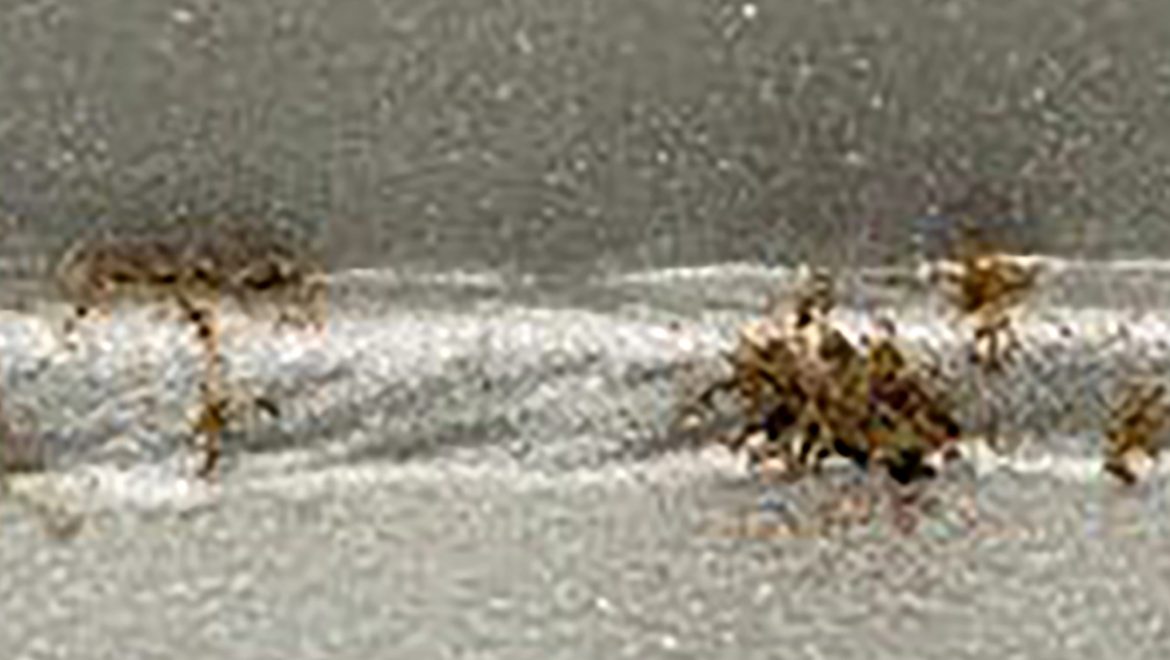
Chlorine is very aggressive to stainless steels.  The Nickel Institute guidelines for continuous exposure at ambient temperatures (~20˚C) and neutral pH (~ pH7), are that 304 can cope with 2ppm chlorine and 316 ~5ppm chlorine.  Higher limits are suitable if a flushing schedule is introduced to the project. In alkaline solutions (pH>7) higher concentrations are possible but this does not help much in swimming pools or drinking water.  Chlorine frequently causes corrosion problems in Stainless Steel.  Chlorine attack can occur with bleach laden washdown water if pools of water form in drains which are usually empty.  Chlorine concentrations in droplets or water films immediately above a still pool or water tank can be higher than the chlorine level in the bulk water. When dosing concentrated chlorine into pipes or tanks, it must be well mixed otherwise concentrated streams will eat out downstream elbows or tank walls near the chlorine inlet.

Much higher concentrations can be used for short periods as the attack on the stainless steel must initiate and form a stable pit for failure to occur.  The American Water and Wastewater Association permits 25 ppm for 24 hours in cases of emergency disinfection.  The food industry can use up to 100 ppm in hot water for minutes followed by rinsing and/or passivation.  It is an effective biocide because the kill rate depends on (exposure time) * (concentration of biocide) but the stainless steel is resistant to the chlorine for the relatively short, high concentration exposure.

And what about chlorides?

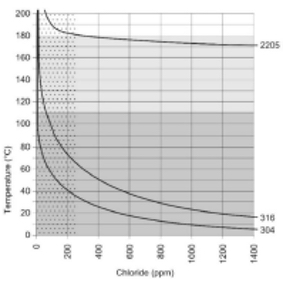
Chloride occurs naturally in drinking water and ranges from less than 10 mg/L in Melbourne to more than 200 mg/L in Adelaide. Chloride is not oxidising and is not a biocide.  The most common form is sodium chloride.  Seawater is about 3% sodium chloride although there are other compounds.  Nickel Institute guidelines for continuous exposure at neutral pH and ambient temperatures permit chloride levels of 200 ppm for 304, 1000 ppm for 316 and 3600 ppm for 2205 duplex.  The guidelines allow for the presence of crevices (such as bolt heads, flanges or deposits) but assume that the surface has been passivated. In alkaline environments (pH>7) higher chloride levels can be tolerated.  Higher temperatures reduce the permissible chloride level. Temperatures over 60˚C are not recommended for 304 or 316 as they are at risk of sudden failure from chloride stress corrosion cracking. The chart below demonstrates the effects of temperature on allowable chlorides.


Summary

Chlorine and chloride are different forms of the same element but with vastly different effects on stainless steel.  Chlorine is bleach and stainless steels can only tolerate exposure to a few ppm continuously.  Chloride is part of the salt in natural waters and even 304 can cope with a few hundred ppm at ambient temperatures and pH~7.

For more information, please refer to our catalogue or our our technical data sheet

General News

The benefits of Annealed Stainless Steel

Stainless steel has been popular since it was invented. As stainless steel materials have good properties like corrosion resistance and high strength, products made of stainless steel materials are widely applied in our life and industry.

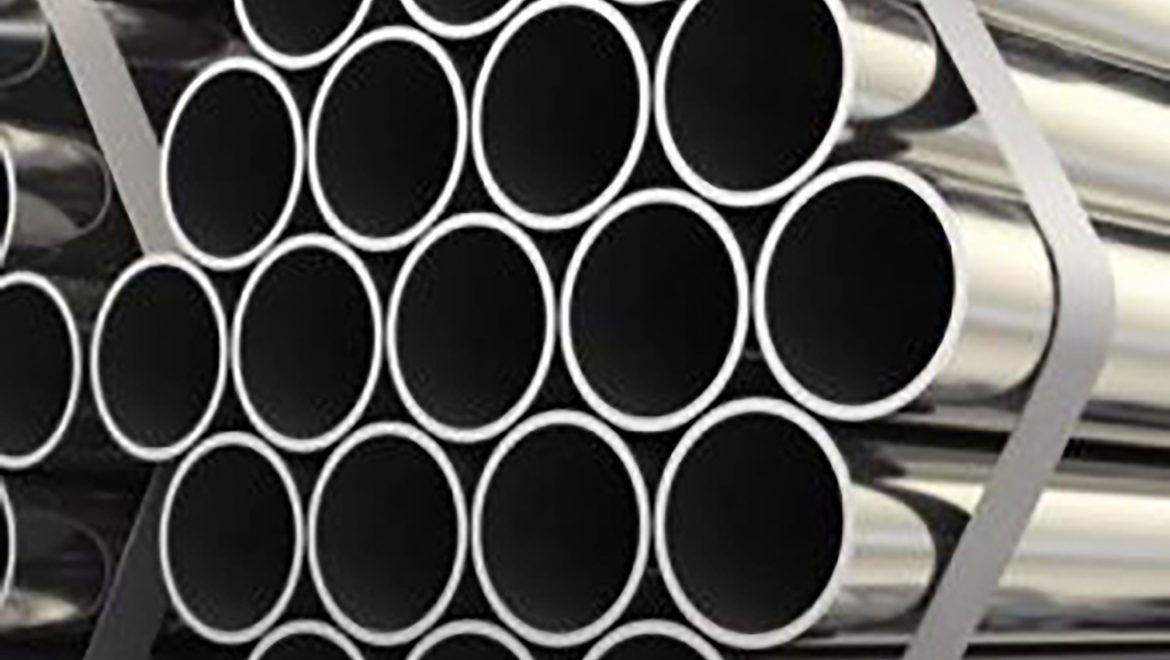
AusPress has been distributing Stainless Steel Press-Fit systems for more than 25 years and is arguably the most experienced company in Australia in this field. Knowing the risks and benefits of any system is a key responsibility of any manufacturer or distributor. AusPress understand that water quality can differ from state to state, town to town and suburb to suburb. The vast majority of any corrosion or pitting in stainless steel systems is caused by water quality, in particular the harshness of the water or the chloride levels. It is for this reason that 12 months ago, AusPress decided to move to fully annealed tube for our stainless steel press-fit system. Our annealed tube is now available in all sizes from 15mm to 168mm.


Annealing stainless steel is critical to certain applications where superior corrosion resistance is necessary. Generally, the more complex the alloy, the more difficult the annealing process (however, austenitic and some ferritic stainless steel types are easy to anneal). The process relieves the stresses of manufacturing and softens the steel down to a point where it can be more easily manipulated. It also improves ductility, which is a desired finished property for certain applications. Stainless steel tube annealing is an important production process and the heat treatment is carried out under controlled conditions to avoid carburisation, decarburisation and scaling on the metal surface. Unlike the annealing process of copper (where the copper tube becomes soft and permeable) the process used to anneal stainless steel (rapid heat and rapid cold) causes the tube molecules to relax along the weld line to aid in corrosion resistance, but the tube remains rigid and strong.

Stainless steel tube annealing is a solution treatment employed for recrystallising the work-hardened austenitic stainless steels and drawing chromium carbides. In addition, stainless steel tube annealing removes stresses that occur during cold-welding, and homogenises dendritic stainless steel welds which are a typical starting point for pitting corrosion.

With the vast majority of press-fit stainless tubes being TIG welded, as the tube is formed and welded, it leaves vulnerabilities in the welded joint which act as a major stress point. In simple terms, the annealing process relaxes these stress points and therefore offers a much higher level of corrosion resistance which further aids in a much higher level of pitting resistance.

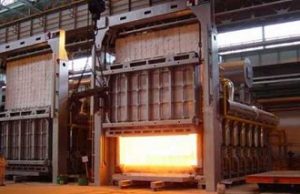
The annealing process is completed by placing the finished tube into a furnace at a temperature of 1040°C, but certain types of steel can be annealed at the temperature below 1010°C. This high temperature is required to ensure a brighter appearance. Heating is done as fast as possible as slow heat will result in oxidation.

After the treatment, the hardness can be enhanced and the metallic luster can be maintained. Stainless steel tube annealing helps to improve the quality and pitting corrosion resistance. In addition to the annealing process, there are also other production processes. For example, there are processes like quench annealing, hardening, cooling and stress reliving. Different processes are aimed to strengthen the certain properties of the stainless steel tubes.

When completing your next project, ensure you use the highest quality products available to ensure a low maintenance and long life installation. Speak to your local AusPress representative for more information.


General News, Marine

AusPress confirms business alliance with Varivane UK

Since 1984, Marine Equipment International (MEI) had been supplying the Royal Australian Navy and contractors quality equipment and solutions. Since our Acquisition of MEI in mid 2020, AusPress have further grown our exposure into the marine sector and we are pleased to further cement our business alliance with Varivane UK – who have been operating with the Naval sector globally since 1962.

Varivane have unparalleled experience in the design and manufacture of marine furniture, and have developed a world-class reputation for quality standards and the wide variety of services that they offer. Couple this with the range of marine products already offered by AusPress and we can now further extend our already extensive product packaging

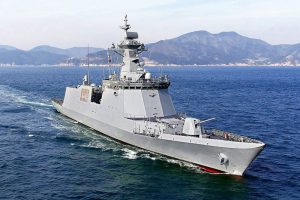
Varivane have completed work for all Naval Vessels; including; QEC Carriers, Type 26 Frigates Type 45 Destroyers, HMS Bulwark, HMS Albion, HMS Ocean, Type 22 & Type 23 Frigates, Type 42 Destroyers, River Boat Class, OPV, RFA Vessels and the decommissioned Ark Royal, Illustrious & Invincible Aircraft Carriers.
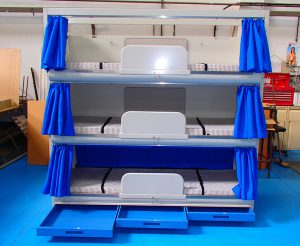
Varivane is the design authority, OEM and prime contractor to BAE, Babcock and the Royal Navy for:
–  Ships Furniture
–  Ammunition and Decoy Stowage Lockers
–  Security Containers

They are also the preferred supplier thorough consortiums and partnerships for:
–  Ships Medical Theatre Equipment
–  Smoke, Fire & Blackout Curtains
–  Mattresses
– Ships Upholstery

Varivane have supported the Royal Navy fleet (UK) for over 30 years, for new-build projects, ship support and refurbishment, holding the enabling contract from the UK Ministry of Defence for the manufacture and supply of furniture to Royal Navy vessels. Their expertise in this field is second to none. 

Variavne are currently assisting the Ministry of Defence in updating its furniture designs, including an upgrade of equipment in the existing fleet and the improvement of equipment on new-build vessels. A new generation of furniture is currently in development, based on the proven technical criteria and ergonomics of NES128, but updated to an improved and more modern aesthetic standard.

AusPress, in close consultation with Varivane will continue to support the Australian marine industry well into the future.

For more information, visit our products page or contact us.